Standard-model OEM
Select an existing AI, audio or AR glasses model for your brand and packaging. Agree the configuration, purchasing budget, order plan and delivery terms. Source licensing and a separate development project are not prerequisites.
AI CAMERA · AUDIO · AR DISPLAY
For brands, consumer electronics companies, enterprises and overseas channel partners. Connect product design, hardware, firmware, SDK integration and manufacturing around the experience your users need.
Standard-model OEM · ODM customization · Optional technology transfer
Explore eight product entries and two historical custom-project references. K900, AR99 and AR99 MY are in mass production; C100 and AR99 Pro offer EVT3 CNC prototypes. Audio 01 accepts ODM project orders. Confidant and Falcon 007 Pro record past development experience; neither is an overseas-ready product or available as a test sample. AR99 MY retains its own cat-eye frame engineering and shared AR99 optics, electronics and software.
Commercial availability and delivery terms depend on the agreed configuration and project scope.
ODM project
Define requirements and feasibility →
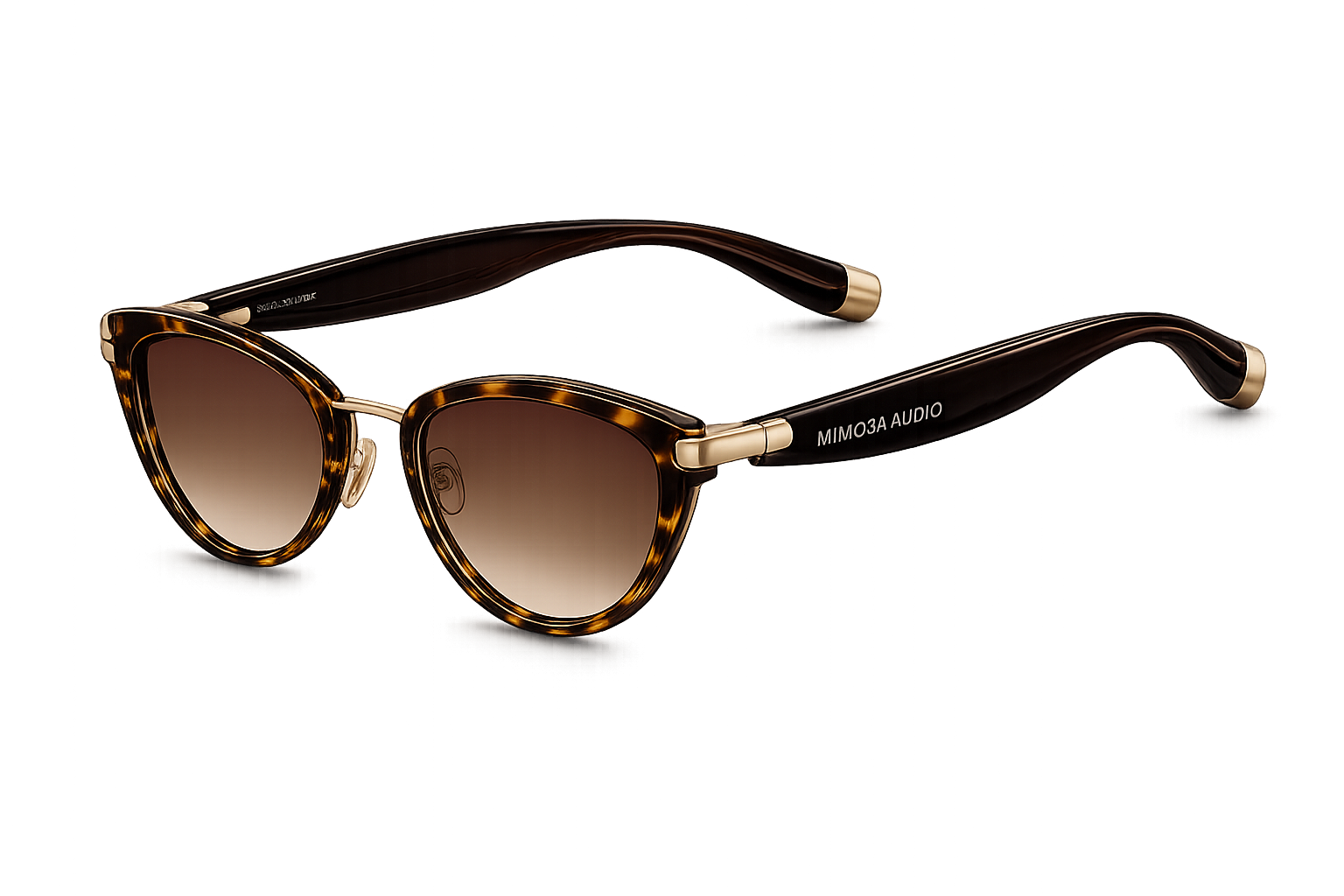
Camera-free, display-free open-ear audio eyewear for ODM project orders only. Discuss industrial design, voice-service integration and application requirements.
Production platform
Review configuration and project fit →
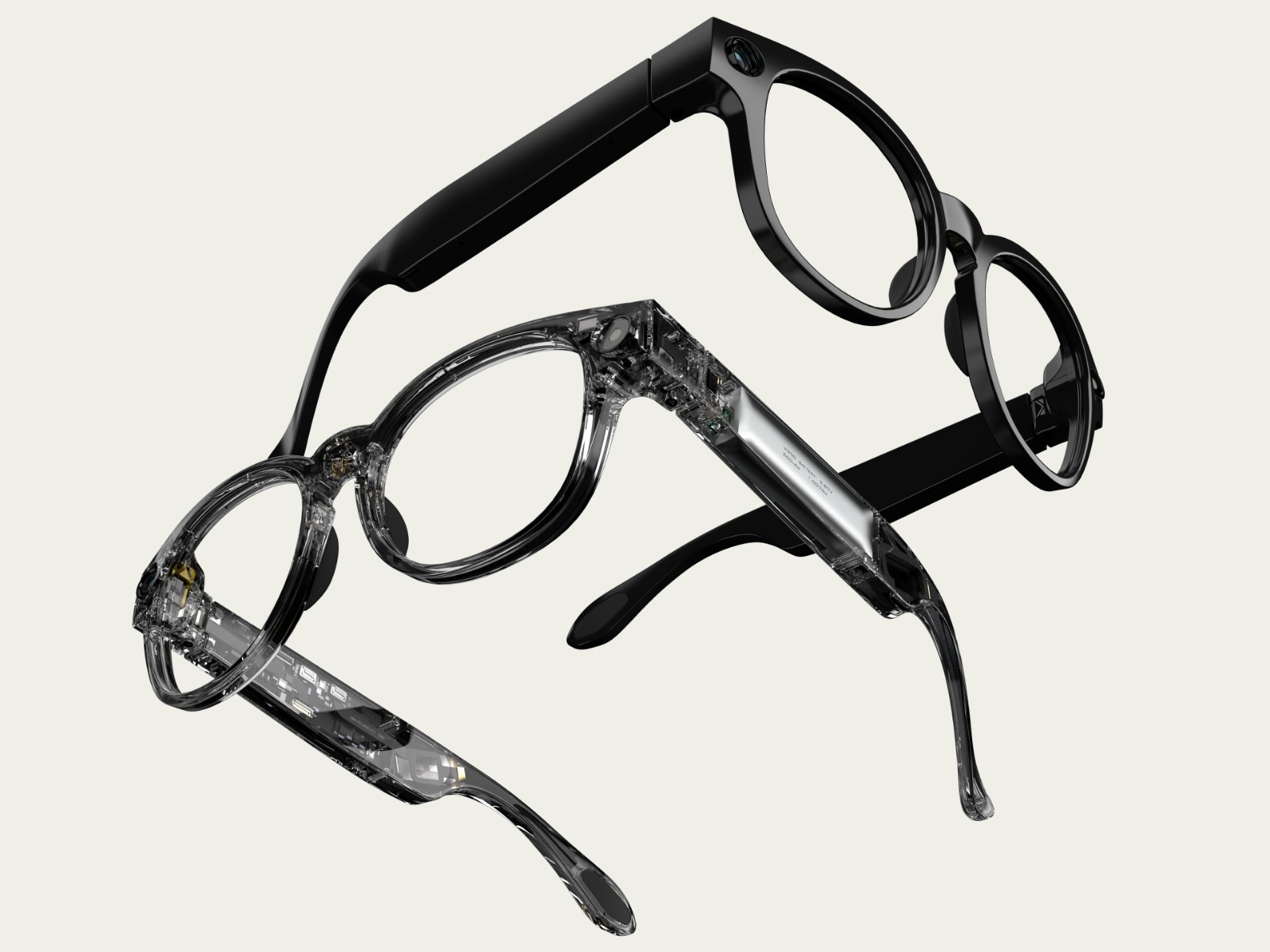
Lightweight AI camera glasses — 13MP Sony, Android, MTK + BES dual-chip, 5-mic AI audio, dual speakers. See the K900 page for sourced MWC 2026 demo context.
EVT3 functional prototype
Evaluate the prototype and integration scope →
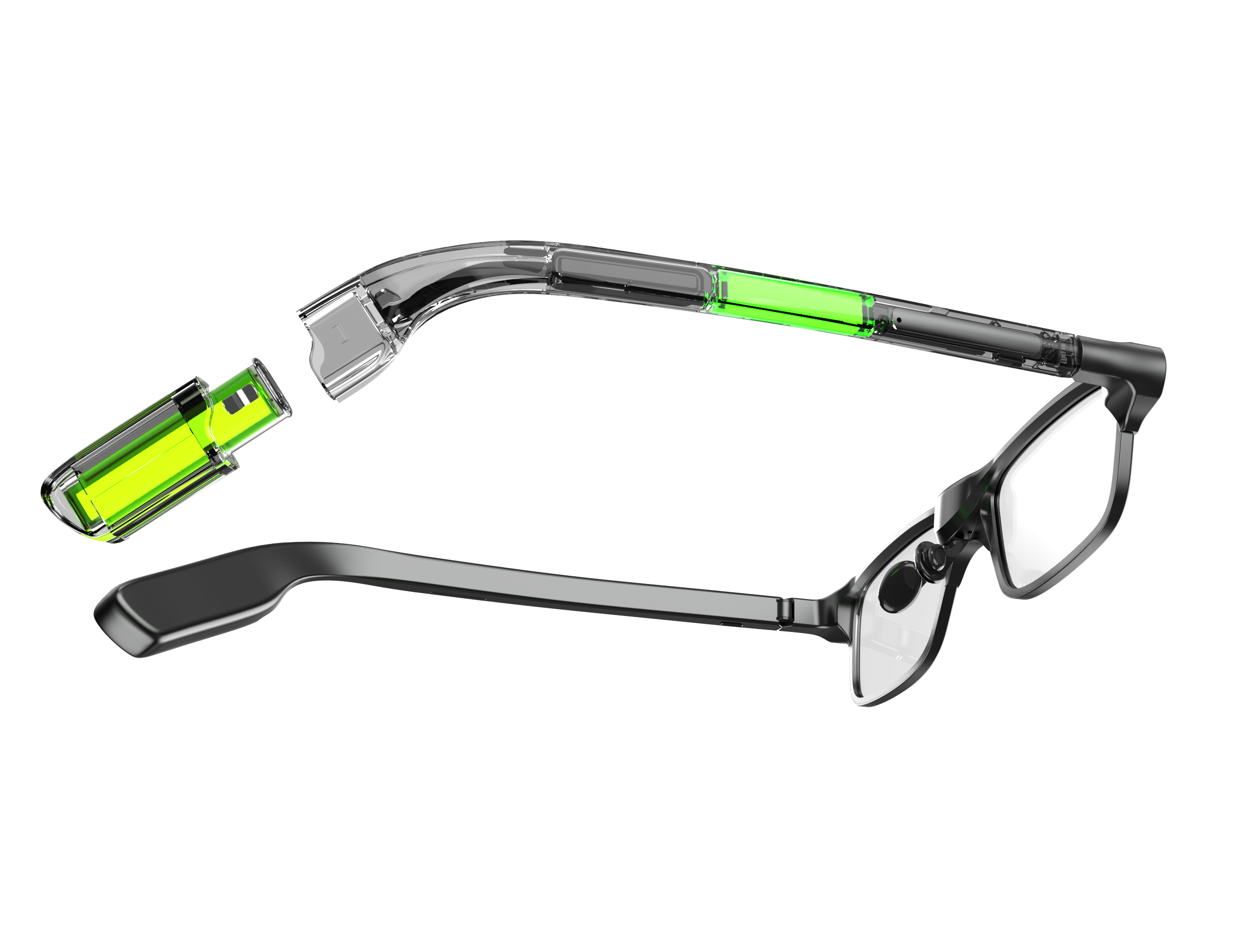
Standalone Android glasses with a Sony IMX681 (12MP) camera and dual-eye AR display. Run apps on the glasses; connect via dual-band Wi-Fi or a BLE phone app. LLM/VLM inference runs off-device. Hot-swappable batteries and external charging case; capacity and configuration confirmed per project. EVT3 CNC functional prototypes and industrial design customization available.
Production platform
Review configuration and project fit →
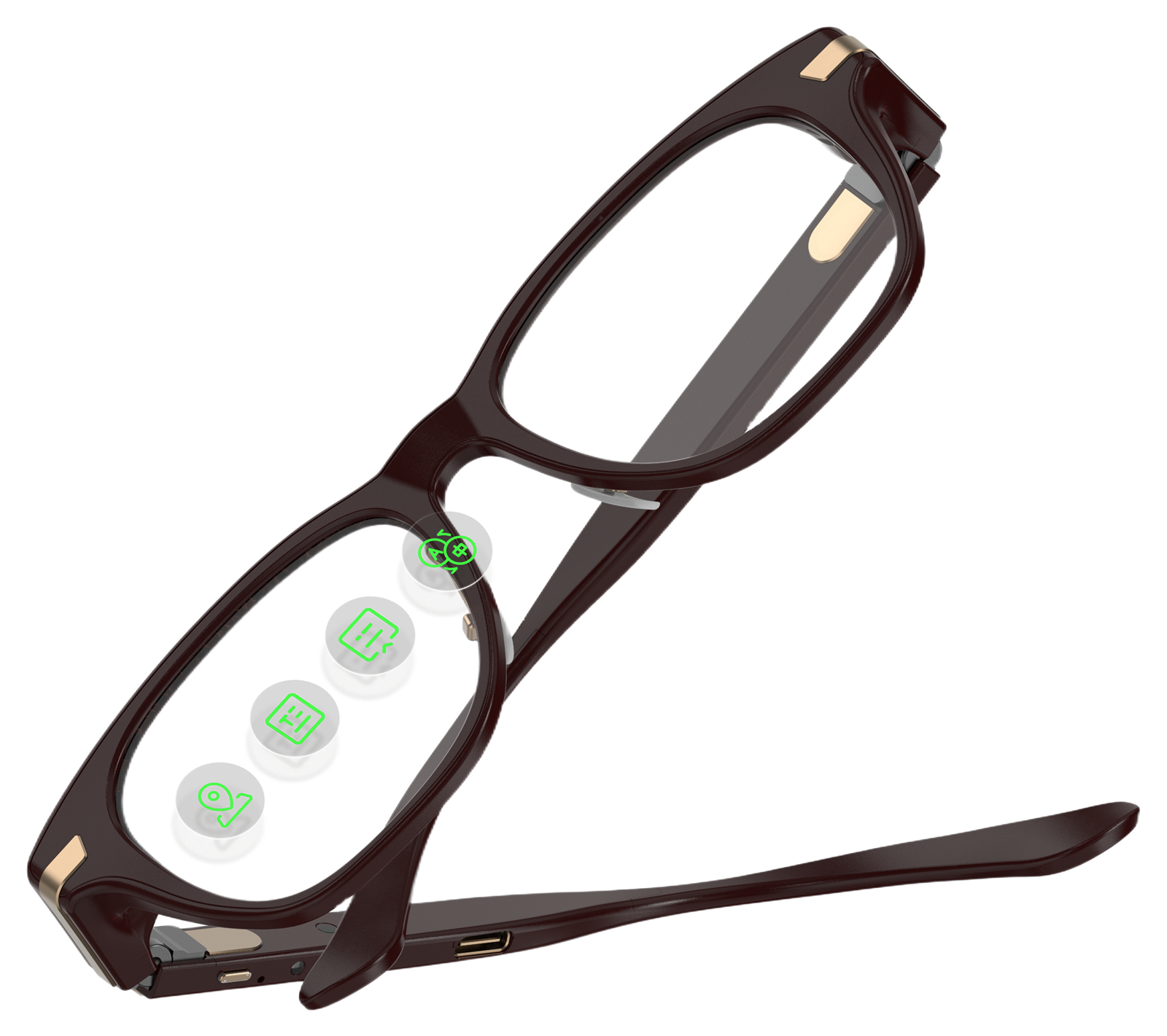
Approximately 28 g bare device excluding prescription lenses, with a 0.12cc Micro-LED module and camera-free, right-eye monocular single-green 640 × 480 @ 30 Hz display. Phone-tethered Bluetooth workflows, 100 mAh fixed battery, physical key + temple touch, and integrated or snap-in prescription lens paths.
Production platform
Review configuration and project fit →
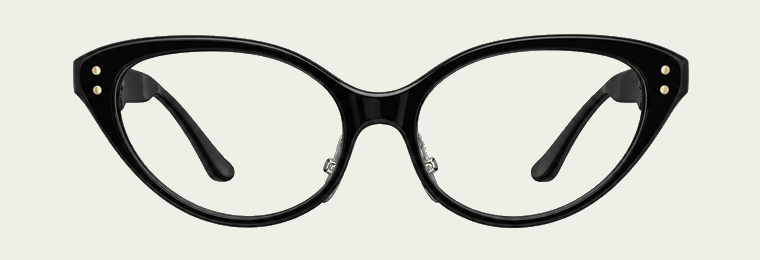
Mimosa women-first cat-eye AR eyewear with its own frame engineering, sharing AR99 optics, electronics and software. Approximately 29 g bare device excluding prescription lenses; camera-free, phone-tethered, right-eye monocular single-green 640 × 480 @ 30 Hz display and 100 mAh fixed battery.
EVT3 functional prototype
Evaluate the prototype and integration scope →
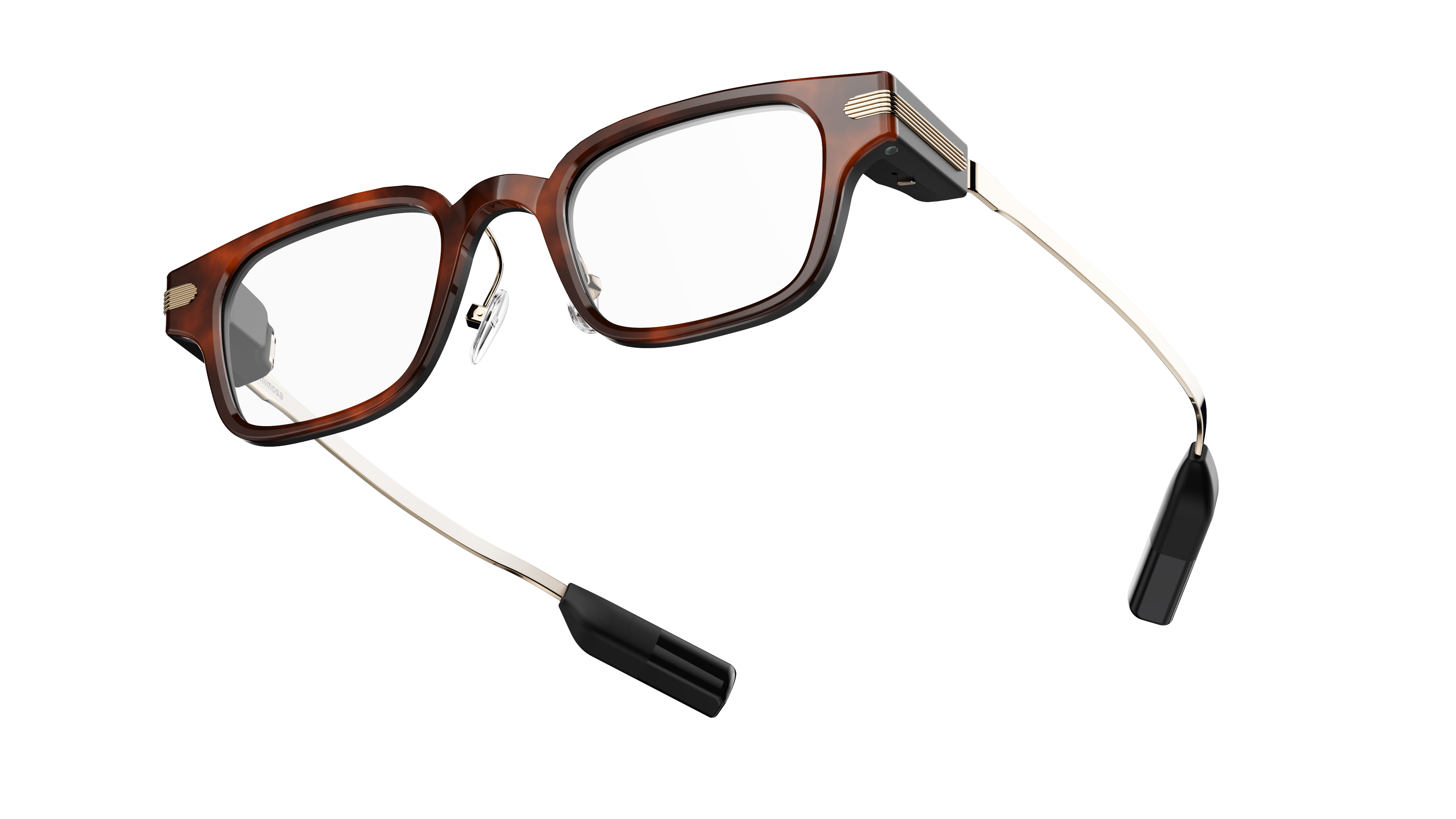
Extended-operation AR configuration with SRG waveguide optics and two 40 mAh user-swappable batteries. 25° FOV, 1,800 nits, 25 g and carbon fiber. Battery replacement does not interrupt operation. EVT3 CNC functional prototypes and industrial design customization are available. A required paired ring controller is supplied with every unit.
AR99 and AR99 MY support OEM, ODM, JDM and white-label projects, with logo-branded pilots on existing frames from 200 units. Pricing and NRE are quoted on specification freeze. Compare product entries and project references.
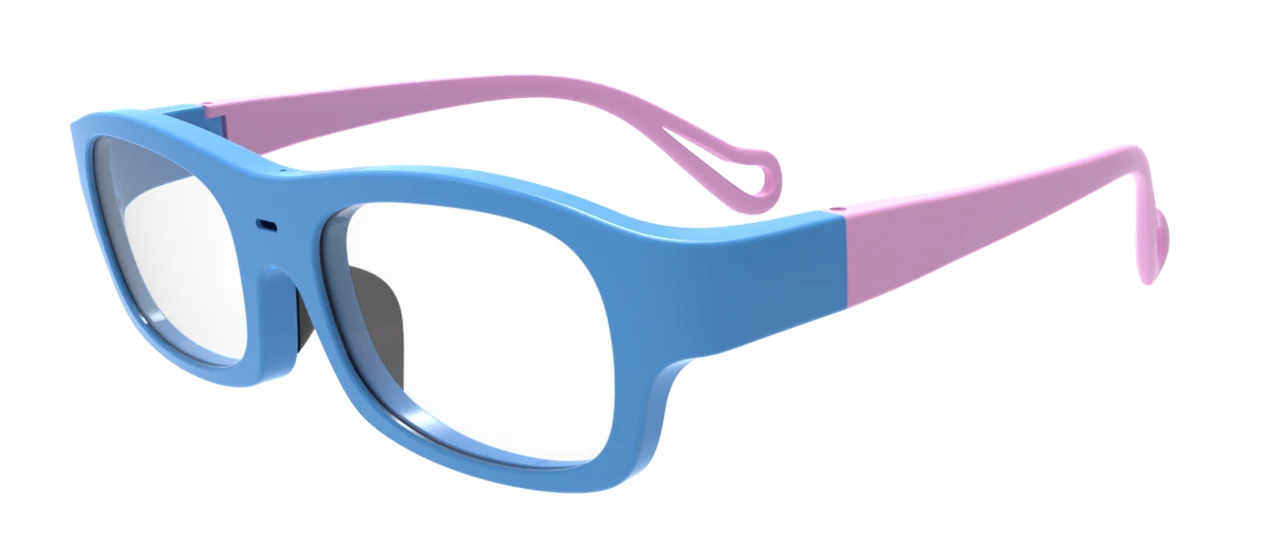
Kids eye-care wearable and screen-time companion for viewing-distance, head-down and posture reminders through gentle sensor-based cues.
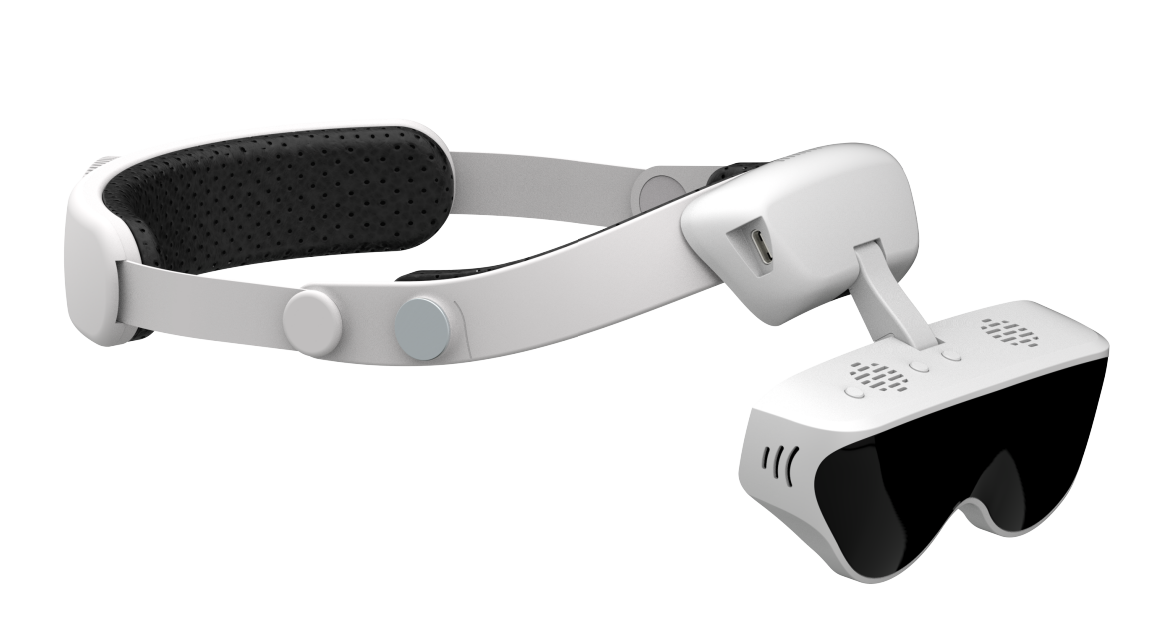
1920×1080 @ 60 Hz binocular Micro-OLED, 55° FOV and 205 g reference weight excluding the data cable. Integration and regulatory scope are confirmed per project.
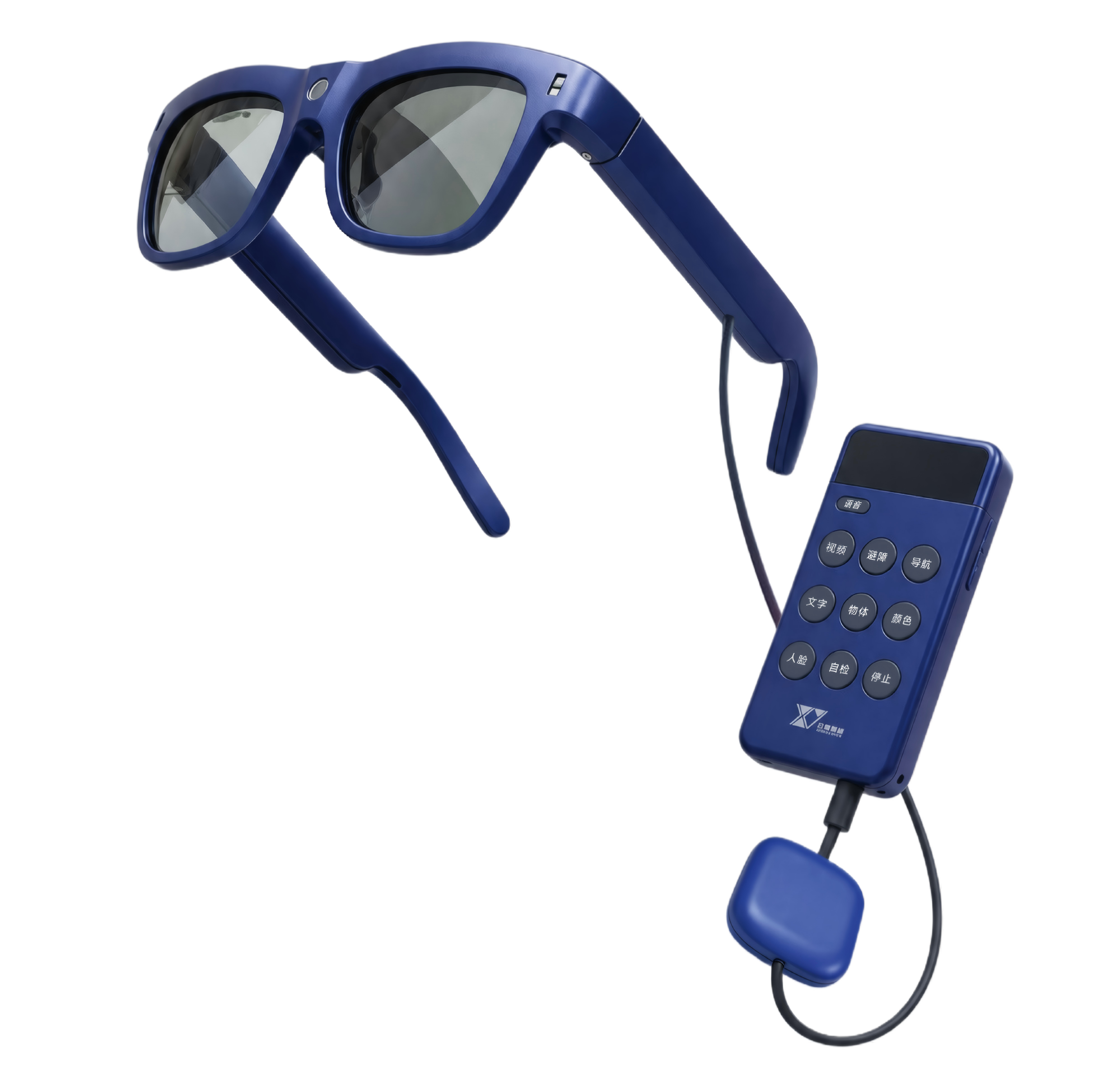
Historical project reference
Discuss a new development scope →
Historical 2021 mainland-China AI assistive project for a disabled persons' federation. No overseas-ready product or test samples. Similar applications require a new ODM project with NRE, development time and project budget.
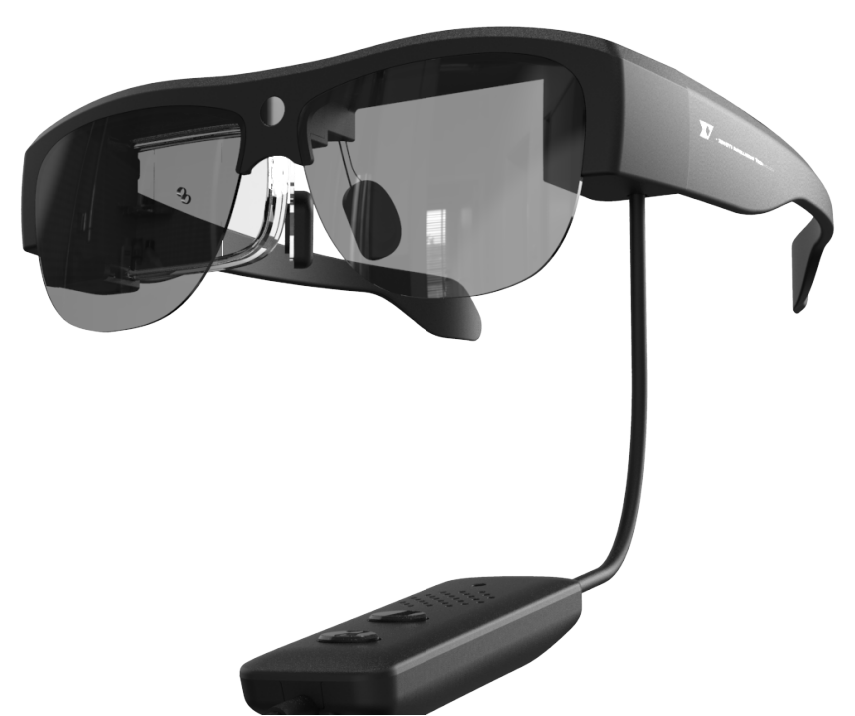
Historical project reference
Discuss a new development scope →
Historical field-operation project reference, including face-recognition and vehicle-traffic-recognition development experience. No overseas-ready product or test samples. Similar applications require a new ODM project with NRE, development time and project budget.
Strategic enterprise partnerships
SmartXY prioritizes established brands, distributors, optical chains, telecom operators and enterprise integrators with strong channels or a credible deployment plan, a purchasing or project budget and an accountable business owner. Choose an existing SmartXY standard model for OEM branding and packaging, or commission an ODM customization project. Source-code licensing, deeper engineering support and technology transfer are optional services, quoted only when required by the agreed scope.
Select an existing AI, audio or AR glasses model for your brand and packaging. Agree the configuration, purchasing budget, order plan and delivery terms. Source licensing and a separate development project are not prerequisites.
Develop the product, CMF, firmware or app scope around your market requirements. Agree the development budget, technical owners, validation plan and production forecast.
Define authorized software, design and process deliverables in a contract. Source licensing, manufacturing know-how and continuity arrangements depend on platform rights and project feasibility.
Business projects only. Personal purchases, price-only one-off sourcing and development without a budget are outside this service. NRE, tooling, licensing, training and production are scoped and quoted separately where applicable.
A useful project plan identifies what is already available, what needs development, who owns each deliverable and how the result will be accepted. Hardware, software, validation and production responsibilities are agreed for the selected configuration.
SmartXY is an AI and AR smart-glasses OEM, ODM and JDM partner. Our AI camera, audio and AR display platforms support consumer-market brands, enterprise, healthcare, accessibility and industrial solutions. We align hardware, optics, software integration, certification planning and manufacturing with your product roadmap, budget and scale-up plan.
The winning AI eyewear product has to feel like a fashion accessory, perform like a flagship device, and scale like a real business. That is the gap SmartXY exists to fill.
Start from the wearer — face shape, comfort, lifestyle, fashion context — then engineer backwards. Not the other way around.
Evaluate stack-up, optical integration, power architecture and hinge design for the selected platform. Weight, prescription lenses, workload and the intended wear period are assessed together; a sub-40g reference does not establish all-day comfort.
Use enterprise or channel pilots to identify configuration, training and support requirements before deciding how to scale the accepted product.
Compare camera, audio and display approaches against a task that matters to your users. A successful product in one category does not validate every configuration or market.
A deployable product connects eyewear fit, electronics, applications and the channel or service model. Identify the owner and acceptance evidence for each part of that work.
Set a launch plan around requirements, engineering evidence, certification scope and production readiness. Channel discussions and prototype work can proceed in parallel, but dates depend on the selected project.
Bring your market and deployment plan so the next investment decision can follow a defined evidence gate.
Display-free is the point. The XY-DC Reference Architecture defines an ODM evaluation direction for robotics, egocentric datasets and vision-language-action training data. It has no waveguide, projector or near-eye display.
Proposed scope covers multi-camera synchronisation, per-unit calibration, cross-device timing, full-shift power and thermal targets, privacy controls and capture-point provenance. These are engineering requirements to assess and validate per project; this reference architecture is not an additional production SKU.
Explore the capture reference architecture →Review the relevant platform records and agree the work, evidence and delivery owner for each layer of your project. Capability scope and available evidence depend on the selected configuration.
OEM · ODM · JDM · schedules agreed after scope review
An agreed SmartXY model with your logo, packaging and approved configuration. Customer-owned build-to-print designs require a separate feasibility and production scope.
Platform customization for your brand, CMF and software requirements, subject to configuration and validation review.
Paid joint development from concept through validation and production planning. Source access and IP rights are defined in the project agreement.
Our customer ODM work spans K900-based brain–computer interface (BCI) integration, EG01 audio glasses for people with hearing loss, and K900 temperature, blood-oxygen and heart-rate monitoring. This experience can help reduce repeated exploration, rework and hidden development costs.
Customer project features are scoped separately from standard platform specifications. Reuse and validation are agreed for each new project.
Explore our ODM project experience →The six phases above describe ODM/JDM development, with requirement freeze, ID/MD freeze, EVT/DVT/PVT gates, certification planning and MP-readiness review. Standard-model OEM follows the agreed branding, configuration, validation and order scope.
Every 2026 C-end SKU is built on B-end engineering muscle accumulated since 2019 — one continuous trajectory, not two separate businesses.
Planning is managed by SKU and target market — wireless, EMC, battery transport, safety, and regional compliance. Medical and regulated-use pathways are handled per project.
SmartXY supports project-scoped source-code access or licensing for qualified enterprise projects. The agreed delivery list identifies the application, SDK or firmware components that may be shared, the build documentation, permitted use, access milestones and fees. Third-party components require their own rights review. An NDA does not grant source-code access or IP ownership; this is not a promise to open-source every platform.
A paid statement of work can cover architecture and interface reviews, firmware and application integration, joint debugging, build and release handover, test documentation and team training. Named owners, deliverables, acceptance criteria, support duration and escalation terms are agreed per project.
SmartXY supports phased technology-transfer planning for qualified enterprise partners. Scope can include authorized process documents, test methods, fixtures, quality controls and engineering training. Local finishing, SKD, CKD or board-level manufacturing is evaluated against the selected product, partner facility, team, investment and demand. Transfer rights, feasibility, compliance and acceptance milestones are agreed before delivery.
SmartXY focuses on business projects with a credible channel or deployment plan, a purchasing or project budget and an accountable business owner. Evaluation units are scoped for qualified business projects. Personal purchases, price-only one-off sourcing and development without a budget are outside this service. Submit a company brief with your market, budget status, annual-volume forecast and launch plan.
SmartXY — Shenzhen Xingyi Intelligent Technology — is a global AI smart glasses OEM/ODM and JDM partner, helping brands transform product concepts into smart eyewear through project-specific engineering and production gates. We provide end-to-end engineering, industrial design, supply chain integration, certification and mass production for global brands.
Standard-platform OEM means an agreed SmartXY model with your branding, packaging and approved configuration. Build-to-print manufacturing from a customer-owned design is a separate feasibility, design-rights and production scope. ODM adds product, CMF, firmware or app customization; JDM scopes joint engineering. Quantity, development fees, tooling, licensing, validation and schedule are agreed after project review.
AR99 and AR99 MY share VHG optics, electronics and software: a camera-free, phone-tethered, right-eye monocular single-green display at 640 × 480 @ 30 Hz, 30° FOV and up to 2,000 nits in-eye brightness under reference conditions. AR99 is the approximately 28 g unisex model; AR99 MY is the approximately 29 g Mimosa women-first cat-eye product with its own frame engineering and catalog entry. Bare weights exclude prescription lenses. AR99 Pro is the EVT3 configuration with SRG optics, 25° FOV, 1,800 nits in-eye brightness, 25 g and carbon fiber. Its two 40 mAh user-swappable batteries support replacement without interrupting operation. A required paired ring controller is supplied with every unit; functional CNC prototypes and industrial design customization are available for mass-production projects.
Compliance is reviewed per product and target market, covering wireless, EMC, battery transport and safety requirements through a project-specific engineering workflow. Medical and regulated-use pathways are handled through dedicated project tracks.
AI integration is platform- and task-specific. K900 captures media and audio for a companion or partner app. AR99 displays content from a paired phone app. C100 runs Android apps on the glasses and sends context through direct Wi-Fi or BLE via a phone app; VLM/LLM inference runs off-device. Confirm endpoint access, SDK interfaces, updates and any local model workload for the selected build.
The portfolio contains eight product entries—K900 (XY-008 AI Glasses), AR99, AR99 MY, AR99 Pro, C100, Audio 01, Nudge and BB Medical—and two historical custom-project references, Confidant and Falcon 007 Pro. Product entries have different commercial and development stages; this is not a list of ten order-ready products. Confidant and Falcon 007 Pro are not overseas-ready products and have no test samples; similar applications require a new ODM project with NRE, development time and project budget. AR99 MY retains its own cat-eye product entry on shared AR99 optics, electronics and software. XY-DC remains a separate display-free ODM reference architecture, not an additional product SKU.
SmartXY has a Shenzhen R&D office at Room 905, Building 1, Xinyi Lingyu R&D Center, with postal code 518100. The Dongguan manufacturing site has operated since December 2025, with 4,800 square metres of Class-10,000 clean-room space, eight production lines and annual capacity of 400,000 units.
Submit an enterprise brief through the SmartXY RFQ form. Include your company, channel or deployment plan, budget status, annual-volume forecast, business owner and launch window. For customization, also identify the technical contact and development budget. Qualified projects proceed to requirements review, confidentiality arrangements and a scoped commercial proposal.
Embodied AI Data Capture Glasses are scoped through the XY-DC Reference Architecture as a display-free ODM evaluation direction, not an additional production SKU. Multi-camera synchronisation, per-unit calibration, cross-device timing, full-shift power and thermal targets, privacy controls and capture-point provenance are project requirements subject to feasibility and validation. Review the reference architecture.
Tell us who will use the glasses, where they will be deployed, what must run on the device and how your team plans to bring the product to market. We will use that brief to assess platform fit and the appropriate commercial scope.
For established brands and enterprise teams with a purchasing or project budget. Source-code access, deep technical support and local capability transfer remain optional paid scopes with agreed responsibilities and acceptance criteria.